




Several thousand microorganisms live in the water which are a part of the biological diversity of the planet. They are mainly blue-green algae, pathogenic microorganisms (viruses, bacteria, fungi and protozoa) as well as relatively safe microorganisms that do not cause dangerous diseases.
Not all microorganisms are harmful. Some bacteria perform important functions such as breaking down biological waste, cleans organic wastewater produced by companies, some even concentrate toxic heavy metals. These microbial functions are used in biological water treatment plants.
Which water has the most microbes?
Water sources according to the distribution of the microorganisms (in ascending order):
- water from deep wells and artesian wells;
- thawed ice: some bacteria and fungal spores survive freezing;
- precipitation that collects dust and microorganisms from the air;
- salty water bodies: relatively less microbial diversity as cell membranes of many microbes are damaged by salts;
- surface waters (rivers, lakes, ponds, wells): the greatest diversity of the microbial species.
The largest number of the microorganisms are in the surface standing water bodies. Surface waters such as rivers and lakes are characterized by putrefactive microorganisms (B. fluorescens, B. aquatile, B. violaceum, P. vulgaris, molds, etc.).
Indicators of microbiological contamination of water
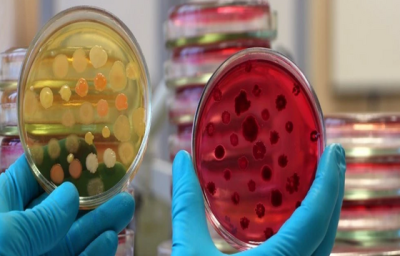
It is not recommended to use microbiologically contaminated water and it requires disinfection.
Water microbiological pollution indicators are:
- Oxidability: characterizes the amount of oxidants used to destroy organic particles and microorganisms. It is an indirect indicator of microbiological pollution (only the cells of microorganisms are oxidized, as well as organic impurities (phenols, etc.)).
- The total number of microbes in the water: the norm is determined by the number of colonies grown on the nutrient medium (1 ml of water, elevated temperature, fixed time of 24 or 72 hours).
- Coli titer: the smallest volume of water (in milliliters) that contains one Escherichia coli;
- Coli index: the number of E. coli in 1 liter of liquid.
Regulatory indicators for drinking water are available here.
Infectious diseases spread by water
According to the classification of the World Health Organization, there are 17 water-borne infectious diseases. Let’s briefly look at the most common of them.
- DIARRHEA (also called “dirty hands disease” )
Diarrhea is one of the leading causes of death in children under the age of five in poor countries. It is usually caused by infections which are caused by viruses, bacteria, protozoa and helminths. The routes of spread of these dangerous microorganisms are often contaminated drinking water and food products as well as poor sanitary conditions. The biggest dangers of diarrhea are dehydration, reduced supply of nutrients and intoxication of the body.
- CHOLERA

Cholera is caused by the presence of V. cholerae or cholera vibrio. This is a very dangerous disease characterized by acute watery diarrhea. Regardless of age, with a severe course of the disease, without appropriate treatment, it can lead to death. Despite the danger of the disease for most people symptoms do not develop and it passes into a mild form.
- TYPHOID
Typhoid fever is a bacterial infection of the intestines and bloodstream. Its causative agents are Salmonella typhi and Salmonella paratyphi bacteria. The most common route of infection is drinking water and food as well as contact with infected people. The symptoms of the disease are constant elevated temperature of 39-40 °C, headache, constipation or diarrhea, pink spots on the chest, enlargement of the liver and spleen.
- LEPTOSPIROSIS
It is an intestinal infection of humans and animals. In the initial stages of this disease symptoms such as headache and muscle pain, redness of the eyes, chills, jaundice, hemorrhages on the skin and mucous membranes, diarrhea and vomiting, rashes, lung bleeding are often manifested. Leptospirosis is caused by pathogenic bacteria Leptospira spp. They can enter the body, damaging the skin and mucous membranes of the eyes, nose and mouth. The most common route of infection is drinking water and bathing in surface water bodies as well as contact with infected animals.
- CAMPYLOBACTERIOSIS
This infectious disease is one of the most common causes of diarrhea. Campylobacter bacteria are usually rod or spiral shaped. The most common of them are C.jenuni and Escherichia coli. Common symptoms are diarrhea, fever, nausea and vomiting, abdominal pain, weakness. Recovery is usually uncomplicated. This pathogen is dangerous for young children, the elderly and those suffering from immunodeficiency conditions.
- HEPATITIS
Two types of this virus – hepatitis A and E – are transmitted by water. Hepatitis A or “Botkin’s disease” or “jaundice” is an acute infectious disease characterized by symptoms such as a yellow skin tone, an increase in body temperature, general weakness and decreased appetite, a change in the color of feces, acute abdominal pain and liver failure. Infection occurs by consuming water or food that is contaminated or by close contact with an infected person. Hepatitis E is less common, outbreaks of the disease are rare in civilized countries, but individual cases are not excluded. Symptoms and consequences are similar to hepatitis A but in this case the transition to a chronic form is extremely rare.
- DERMATOMYCOSIS
Dermatomycosis is fungal disease of the feet, scalp and body. Symptoms include red spots, itching, dry skin, peeling. Infection with the fungus is possible through contact with stagnant surface water, public showers and swimming pool water. To avoid water contamination with fungi effective disinfection reagents are used which mostly contain chlorine. To get rid of fungal spores on surfaces they must be thoroughly dried. Treatment is carried out by local or systemic antifungal agents.
- CYANOBACTERIA

Blue-green algae themselves are not pathogenic but the toxins released by some species are dangerous. People can ingest these toxins both by drinking water and by bathing in it. Cyanobacteria have the characteristics of bacteria and plants (algae) at the same time, as they are capable of photosynthesis. The course of diseases caused by cyanobacterial waste products depends on the predominant type of bacteria and the effect of the water on the person. The most common bacteria form a film on the surface of the water but if their distribution is strong, then they are found throughout the water.
How to check if there are bacteria and viruses in the water?
A variety of testing methods can be used to test water for bacteria and viruses.
Test strips for the detection of microbiological contamination allow the number of bacteria in water to be determined. They are suitable for home use and can indicate the possibility of bacteria. For a more accurate analysis it is possible to take a water sample and send it to the laboratory. It involves detecting certain amounts of bacteria or viruses in the water such as coliform bacteria, E. coli, etc. Portable electronic testers are also available that can quickly determine the level of water contamination by various parameters, including microbiological contamination.
The choice of the most appropriate method and test depends on how much detailed information needs to be obtained and what specific pathogens need to be tested.
Water disinfection
Various disinfection technologies are used to destroy microorganisms:
- Disinfection with chlorine-containing preparations. Chlorine is effective against 99.9% of microorganisms. This method is ideal for use in centralized water supply systems, water pools, etc. Its main advantage is long-lasting effect.
- Ozone. This method is quite common nowadays. Although it has high efficiency, it forms toxic interaction products and has no long-term effect. Ozone is mainly used in industry, it is not suitable for centralized water supply systems, swimming pools, etc.
- UV disinfectants. The advantage of this method is the absence of reagents that can cause secondary water pollution. However, they have relatively low efficiency. UV lamps are usually used as an additional element in water treatment schemes.
- Reverse osmosis. Thanks to the small pores of the filter membrane, it cleans the water from bacteria and viruses. This method is suitable for both industrial and domestic drinking water. To prevent secondary pollution, it is recommended to install a UV lamp after the filter.
- Heavy metal ions damage some microorganisms. Adding them to solutions can slow the clogging of containers. Solutions of silver salts are often used for this purpose.
How to prevent microbiological contamination?
To prevent the formation of microbiological contamination, a combination of disinfection processes with other actions is used:
- previous and current water disinfection;
- mechanical cleaning;
- regular disinfection of containers.
Depending on the goals, these methods are usually combined in a different order. For example, bottled water production uses disinfected water that is poured into a single-use sterile container and hermetically sealed. Delivery products use technology where osmotic water is poured into containers that have been treated with a disinfectant and washed. Chlorine disinfectants, mechanical cleaning of the pool walls and water filtration using mechanical filters are mainly used to solve the pollution problem in swimming pools.
Read also: Chlorine in water.