






Description:
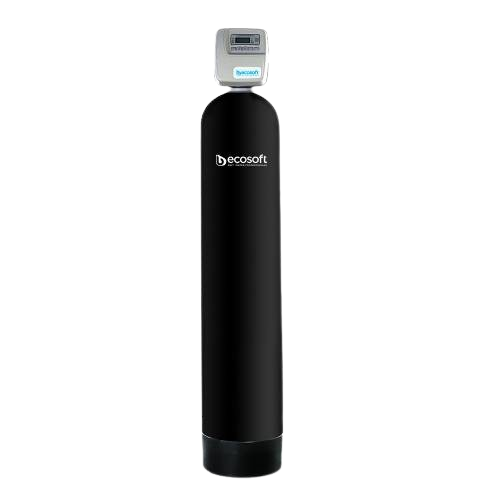
CENTAVR® the filter is designed to effectively remove hydrogen sulfide, which causes an unpleasant “rotten egg” smell.
MODEL FEATURES
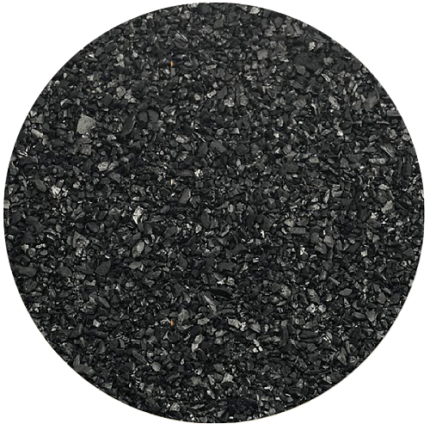
Ecosoft FPC 1252 CT uses CENTAUR activated carbon (manufactured by Calgon Carbon, USA) as filter material. ®
CENTAUR has catalytic properties and is able to oxidize hydrogen sulfide to safe, odorless compounds. ®
As a result of cleaning, the water will become clear, and the foreign taste and unpleasant smell will disappear.
WHAT ARE THE BENEFITS?
Eliminate the unpleasant “rotten egg” smell
Full automation of the filter
Reliable and efficient operation for up to 5 years*
Small amount of waste water
Quality assurance (confirmation with international CE and ISO certificates)
Properties
TECHNICAL PARAMETERS
| Labor productivity, m3/year | 0,86 |
| Performance after installation of Ecosoft FK or FU, m3/year | 1,73 |
| Amount of CENTAUR® activated carbon, kg | 30 |
| Water consumption for regeneration, m3/year | 1,73 |
| Regeneration duration, min | 15… 30 |
| Amount of water per regeneration, m3 | 0,4…0,8 |
| The required level of preliminary water purification from mechanical impurities | 100 μm |
| Working pressure, bars | 2… 6 |
| Differential pressure in working mode, bar | 0,5… 1,0 |
| Water temperature in the source, °C | +4…+30 |
| Control valve power supply and power consumption | 230 V, 50 Hz, līdz 30 W |
| Installation connection (male thread) | 1″ |
| Net weight, kg | 50 |
| Total dimensions of the filter (H x D), cm | 152×31 |
| Filter type | Carbon water filters |
| A problem | Hydrogen sulfide (rotten egg smell) |
| Application | Private house, cottage |
| Filter material | Centaur catalytic filter material |
| Korpusa tips | Column |
* depends on feedwater TDS, temperature and permeability recovery
** for low flocculation/water pollution
Ienākošais ūdens, prasības:
| Inlet water temperature: | +5 – +40 °С |
| Chlorine balance, max.: | 0,1 mg/l |
| Hardness: | up to 3 meq/l (150 mg/l CaCO₃) |
| Iron: | up to 0,1 mg/l |
| Manganese: | up to 0,05 mg/l |
| Silicate: | up to 20 mg/l |
| Chemical oxygen consumption, max.: | 4,0 mg О₂/L |
| Limits may be exceeded if antiscalants, oxygen scavengers, or other RO chemical pretreatments are used. |







Reviews
There are no reviews yet.