

Heavy metals in the water


Heavy metals are elements of Mendeleev’s periodic system that have metallic properties and high molecular weight. In this article we will talk about the impact of the heavy metals (manganese, lead, mercury, cadmium, zinc, nickel and cobalt, arsenic) on human health. We will also look at possible sources of heavy metal pollution and find out which technologies are the most suitable for the water purification.
The sources of the water pollution
Heavy metal pollution is anthropogenic pollution. This means that the majority of heavy metal salts enter the environment as a result of human actions like mining, processing plants and thermal power plant emissions.
One of the largest sources of heavy metal pollution is insufficiently treated wastewater that flows into surface water bodies. Another important source of pollution is flue gas that settles on the surface of the earth and is washed into the water sources. Water from the flooded mines is considered as one of the most serious sources of pollution. In this case even groundwater is polluted.
Manganese in the water
Manganese is the second most common polluter in the well water after iron, which we discussed in a separate publication. Black/gray/dark brown sediments on pipes and plumbing can indicate manganese in the water. Such water is usually in yellowish color. Prolonged contact can darken a person’s hands and nails. At high concentration of this mineral black deposits may appear in the water.
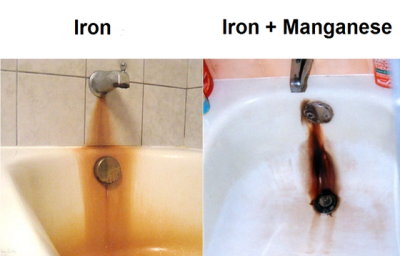
The figure shows the difference between the deposits formed by the water with a high iron content and the deposits formed by the water with a high iron + manganese content.
Manganese belongs to the third group of toxic substances or the group of “moderately dangerous” substances. Despite the fact that manganese participates in the processes of fermentation, hematopoiesis and bone tissue formation, an excess of this mineral can negatively affect a person’s well-being.
The main consequences of regular consumption of water with a high manganese content are central nervous system problems, manifested as drowsiness, weakness and sometimes even long-term depression disorders. The studies have also confirmed that the excess of manganese can negatively affect the gastrointestinal tract, kidneys and bone tissue. A musculoskeletal disease called manganese rickets is particularly dangerous for children.
The main sources of manganese in the surface waters are leaching processes of iron-manganese ore and other manganese containing minerals. As for its natural content in the well water, the reason is the decomposition processes of living organisms.
Lead in the water
Lead belongs to the second group of toxic substances. In Latvia the lead norm in drinking water is 10 µg/l or 0.01 mg/l. Dangerous dose of lead is considered if its concentration in the water reaches 1 mg/l.
Lead is widespread in the surface water. The degree of pollution depends on the industrial development and traffic saturation on the highways. In large cities and villages near highways drinking water from the wells or springs is risky to consume.
Lead in a small concentration gives a pleasant sweet taste to the water. However, the consequences of regular use of water with a high lead content are impressive: damage to nerves, hematopoiesis, cardiovascular, excretory systems, female and male sexual dysfunctions. There are studies that also confirm the carcinogenic effects of lead. The highest toxicity with this metal is precisely for small children. They absorb up to 40% of it while adults absorb no more than 10%.
Lead has a dangerous effect on the nervous system. Lead encephalopathy is accompanied by epileptic seizures and headaches. The lead poisoning for children can cause a decrease in the level of mental development as well as hearing and vision problems. Other common effects are anemia and kidney problems.
Main sources of lead pollution:
- natural sources (natural minerals containing lead);
- non-ferrous and ferrous metallurgy (obtaining metal and their alloys as well as raw material processing processes);
- mechanical engineering, fuel industry and energy (pollution caused by the use of leaded gasoline);
- chemical industry (production of pigments);
- transport companies (the use of gasoline);
- household waste (people throw organic waste and batteries in general containers).
Mercury in the water
Many people know what mercury beads from a broken thermometer look like but know little about soluble mercury compounds. These are inorganic compounds that are formed during the burning of coal in power plants, during the burning of industrial waste as well as during the production process of batteries. Thus mercury compounds get into the atmosphere, then into the water.
Organic compounds of mercury, which are formed during the activity of bacteria in water bodies and the ocean, also belong to the second group of toxic substances. One of the most common organic compounds is methylmercury, which is found in fish and shellfish that are harmful to eat.
The health effects of organic mercury compounds depend on the dose taken. These compounds are dangerous especially for embryos and small children. When the mother consumes marine products with an increased content of mercury, these harmful substances can be transferred to an unborn child, affecting its development (disturbed development of the brain and nervous system affecting memory, language, attention and other skills).
Cadmium in the water
Cadmium belongs to substances of the second toxicity class and can cause serious health problems. The maximum permissible limit of cadmium in the drinking water is 5.0 µg/l or 0.005 mg/l.
Its action is based on the ability to bind sulfuric acids and enzymes, as a result cadmium has nephrotoxicity and hepatotoxicity. The consequences of acute poisoning can be increased blood pressure, kidney and lung failure, pathologies of the cardiovascular system. Cadmium is carcinogenic and can accumulate in the human body.
Zinc in the water
Zinc is a trace element that participates in small amounts in the metabolism of enzymes as well as in the formation of steroid hormones and insulin. However, it also causes specific diseases.
Water may contain soluble zinc compounds such as sulfates and chlorides. In case of zinc salt intoxication changes in the kidney function occur and jaundice may occur. Over a longer period of time zinc salts can cause a decrease in calcium content in the blood and bones, as a result phosphorus metabolism is disturbed and osteoporosis may develop. In addition, they also have carcinogenic properties and they can cause infertility.
The main sources of zinc entering the water are metallurgical and mechanical engineering companies, chemical and pharmaceutical companies as well as woodworking and textile industries.
Nickel and cobalt in the water
Nickel is an important trace element that can cause increased excitability of the central nervous system, anemia and allergic reactions. Nickel can affect DNA structure and increase the risk of neoplasms. As for cobalt, its effects are similar and can cause heart disease.
Arsenic in the water
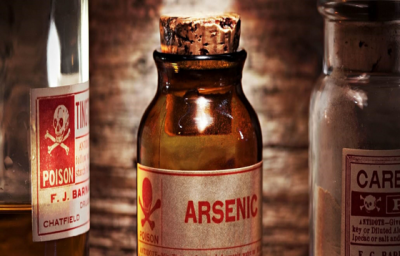
Arsenic was one of the most popular poisons in the Middle Ages. Even very low level of arsenic salts in drinking water are dangerous. It has a toxic effect on all systems of the human body and can cause death.
Sources of natural arsenic pollution are some natural minerals but more often it gets into the water under the influence of anthropogenic factors. The main sources of arsenic pollution are non-ferrous metallurgical plants, steel mills and coal-fired thermal power plants. Pesticides with a small arsenic content are also actively used which pollute groundwater and water bodies.
How to purify the water from heavy metals?
Reverse osmosis is the most optimal technology for the water purification from heavy metals. Thanks to the membrane element of the reverse osmosis filter complete removal of metals and other toxic substances from the water is ensured, making it safe for adults and children.
Ion exchange ensures the reduction of heavy metal content and water hardness. It is often used in centralized water treatment plants. For the separation of manganese and iron specific catalytic materials are used which convert them into an insoluble form and keep the obtained particles. Read more about ion exchange technology and Ecomix material here .